Mendien Ahotsa
Mountain knowledge systems, exhibitions and documentary.
 ARALAR
Mountains hold more than landscapes. Mendien Ahotsa brings lived experience and biocultural knowledge into conversations about climate change, ecological disruption and our relationship with the living world.
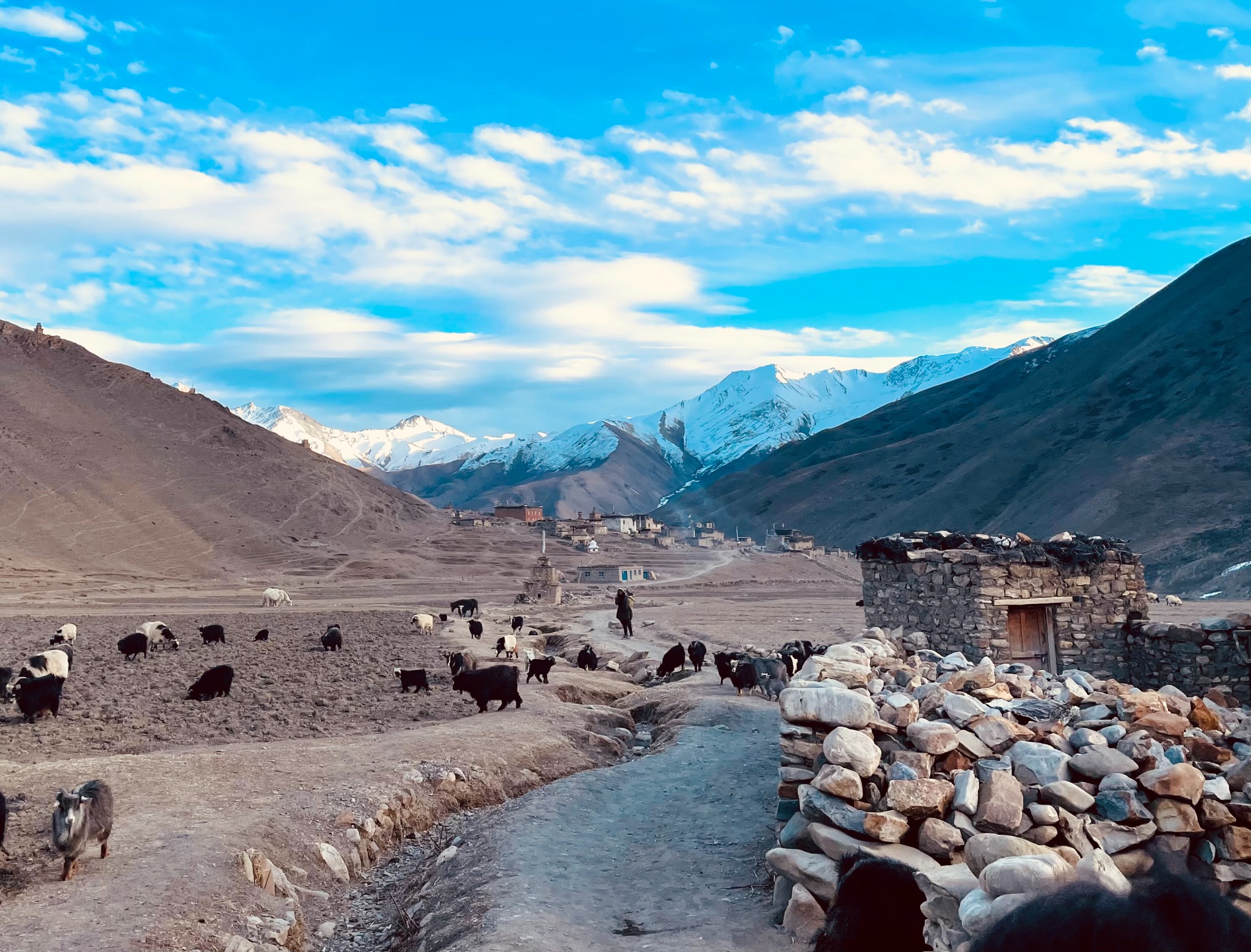
Mendien Ahotsa is a documentary that grew out of three years of travelling across three continents, walking through different biocultures and staying close to mountains and living places that carry deep meaning for the communities around them. The journey passes through Dolpo and Lubra in Nepal; Taos and Tiburon in the United States; the Hebrides in Scotland; Aralar in the Basque Country; and Svaneti and Kazbegi in Georgia.
Along the way, mountains regarded as sacred become places of encounter: with people, with other living beings, and with ways of understanding the world in which these relationships shape everyday life. As communities face the consequences of climate change, walking, staying and listening reveal how care, belonging and responsibility are lived.
The documentary bears witness to worldviews and responses that invite us to reconsider how we relate to the living world. What might we learn from a place when we spend time with it—and from the people who continue to care for it?
Presented at a festival, in a village or in a city, Mendien Ahotsa invites an audience into this journey and opens a conversation about the relationships we want to carry into the future.
Documentary, exhibitions, workshops and people’s own voices connect communities through lived experience and biocultures. Share stories with consent and respect for the people and knowledge behind them.
Mountain knowledge systems, exhibitions and documentary.
Support voices of the young—their own lived experiences, questions and relationships with the living world. Help create space for young people to tell the stories they choose to share.
Support or co-createCombine cultural knowledge, nature-based education and Rights of Nature through reflection, documentary, exhibitions and dialogue.
Understand the starting point → co-create an experience → share what we learn.What do we lose when we stop experiencing the living world?
Stories can open a door. Direct experience gives us somewhere to begin.
Mendien Ahotsa explores how people live with mountains and other living places: the knowledge carried through everyday practices, memories, livelihoods and relationships.
In places facing climate change and ecological disruption, local and Indigenous knowledge can help us ask better questions and imagine responses alongside science. No community holds every answer. Sharing begins with listening, permission and respect for the people who hold that knowledge.
Explore how changing landscapes affect livelihoods, belonging and daily life. Bring lived experience into dialogue about responses that make sense for a place.
Use the documentary, photographic exhibition and a facilitated workshop to open conversations about the value of living places, rights, responsibility and reciprocity.
Make room for young people’s own experiences alongside community and biocultural knowledge. Share voices with consent, attribution and care.
A museum, cultural centre, university, park or other institution can connect a documentary screening with the photographic exhibition, a workshop and an experience in a nearby living place.
The Living World Relationship Index and systems analysis help frame the shared question. Participant reflections help us learn what the experience means to people; they do not by themselves prove health or ecological change.